 Japan Guide
Moving to Japan is exciting, but daily life can feel very different from what you’re used to. Many foreigners experience culture shock, not because Japan is unfriendly, but because social rules, communication styles, and expectations are unique.
This guide explains the most common culture shocks in Japan and gives practical ways to deal with them, based on real experiences.
What Is Culture Shock?
Culture shock happens when familiar habits stop working. Simple things like talking to coworkers, using public transport, or even throwing away trash can suddenly feel stressful.
The good news: culture shock is normal, temporary, and manageable.
1. Indirect Communication
What feels strange
In Japan, people often avoid saying “no” directly. You might hear:
- “It’s a little difficult…”
- “We’ll think about it”
- Silence instead of an answer
To foreigners, this can feel confusing or unclear.
How to deal with it
- Listen for context and tone, not just words
- Ask polite follow-up questions
- Don’t push for direct answers in public settings
Over time, you’ll learn what phrases really mean.
2. Silence in Conversations
What feels strange
Silence is normal in Japan. In meetings or conversations, people may pause for a long time.
Foreigners often feel pressured to fill the silence.
How to deal with it
- Stay calm and wait
- Silence often means thinking, not disagreement
- Avoid interrupting
This is one of the hardest habits to learn, but also one of the most important.
3. Strict Rules and Procedures
What feels strange
Japan has rules for almost everything:
- Trash separation
- Apartment noise
- Office procedures
- Forms and paperwork
Breaking rules unintentionally can cause stress.
How to deal with it
- Observe before acting
- Ask coworkers or neighbors politely
- Follow instructions carefully, even if they feel excessive
Rules exist to keep daily life smooth for everyone.
4. Punctuality Is Extremely Important
What feels strange
Being even 2–3 minutes late can be considered rude.
Trains, meetings, and work schedules are very strict.
How to deal with it
- Aim to arrive 10 minutes early
- Plan buffer time for transport
- Apologize sincerely if you are late
Punctuality is seen as respect, not pressure.
5. Work Culture Feels Formal
What feels strange
Japanese work culture can include:
- Long working hours
- Formal language
- Hierarchical relationships
- Group decision-making
Foreigners may feel they lack freedom at work.
How to deal with it
- Learn basic workplace etiquette
- Watch how colleagues behave
- Ask questions privately, not in meetings
Not all companies are the same, but understanding expectations helps.
6. Limited Personal Space (Sometimes)
What feels strange
- Crowded trains
- Small apartments
- Busy city areas
Personal space may feel smaller than expected.
How to deal with it
- Avoid rush hours when possible
- Use quiet cars on trains
- Choose housing outside city centers
Crowding is part of city life, especially in Tokyo.
7. Politeness Can Feel Distant
What feels strange
People are polite, but not always friendly in a casual way. Smiling strangers or small talk is less common.
This can feel cold at first.
How to deal with it
- Understand politeness is a form of care
- Build relationships slowly
- Join communities, clubs, or language exchanges
Once trust is built, relationships can be very deep.
8. Public Behavior Is Highly Controlled
What feels strange
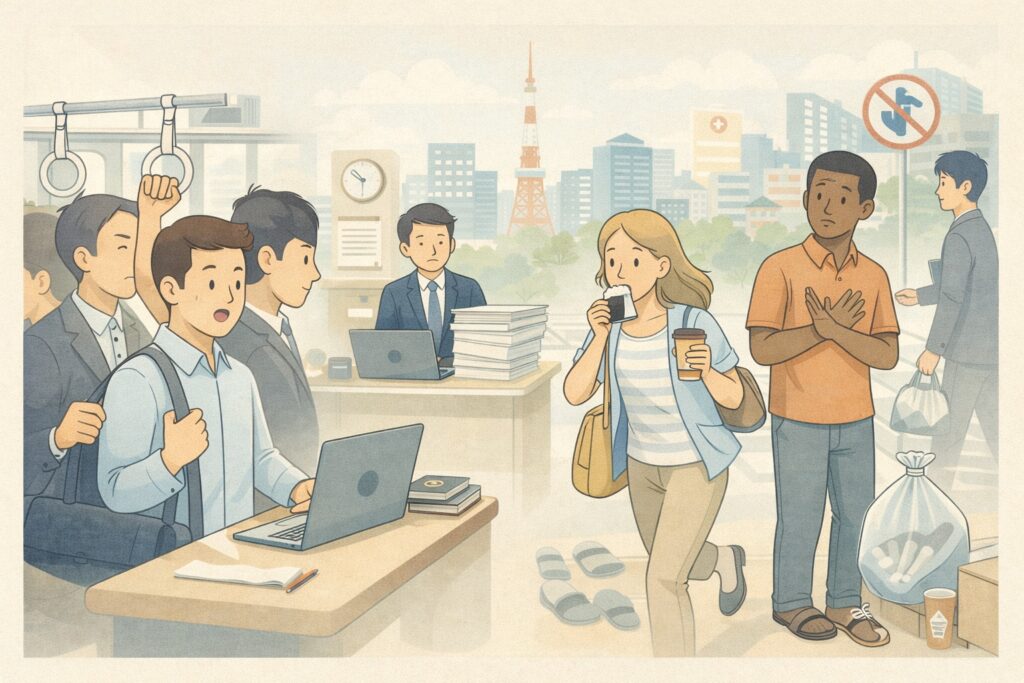
- No loud phone calls on trains
- Eating while walking is uncommon
- Strong awareness of others
Foreigners may feel constantly watched.
How to deal with it
- Observe local behavior
- Follow the general atmosphere
- Don’t worry about small mistakes
People are usually understanding toward foreigners who try.
9. Homes Are Very Different
What feels strange
- Small rooms
- Thin walls
- Limited storage
- No central heating
Housing standards may surprise newcomers.
How to deal with it
- Adjust expectations
- Invest in small-space organization
- Use seasonal items (heaters, fans)
You’ll adapt faster than you expect.
10. Emotional Ups and Downs
What feels strange
At first, everything feels exciting. Later, frustration or loneliness may appear.
This is normal and happens in stages.
How to deal with it
- Talk to other foreigners
- Keep contact with home
- Build a routine
- Be patient with yourself
Culture shock fades as daily life becomes familiar.
Tips to Overcome Culture Shock Faster
- Learn basic Japanese phrases
- Observe more, judge less
- Ask questions politely
- Accept that mistakes will happen
- Focus on progress, not perfection
Final Thoughts
Culture shock in Japan is not a sign that you don’t belong. It’s a sign that you’re learning something new.
With time, understanding, and openness, what once felt strange often becomes comfortable, and even enjoyable.
Living in Japan is a journey, not a test.