 Japan Guide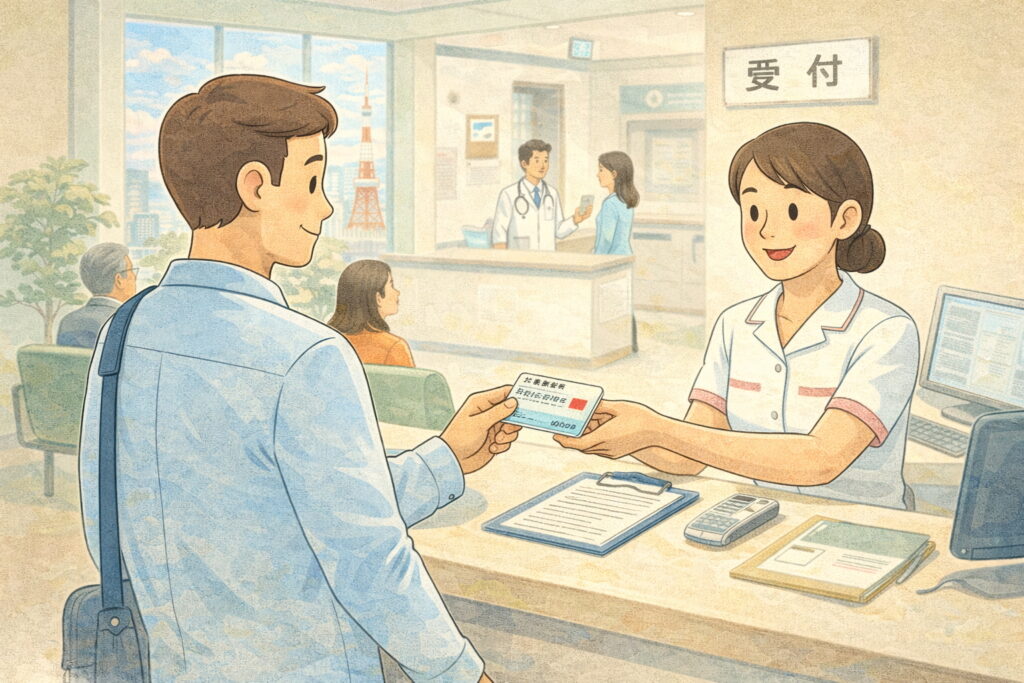
Japan has one of the best healthcare systems in the world. Medical care is high quality, affordable, and widely available.
If you live in Japan, health insurance is mandatory, and understanding how it works will save you money and stress.
This guide explains Japan’s health insurance system in simple words, what you pay, and what to do when you get sick.
Is Health Insurance Mandatory in Japan?
Yes.
If you live in Japan for more than 3 months, you must join a health insurance plan.
Health insurance covers:
- Doctor visits
- Hospital treatment
- Medicine
- Surgery
- Emergency care
Without insurance, medical bills can be very expensive.
Two Main Types of Health Insurance in Japan
Most foreigners join one of these two systems:
1. National Health Insurance (NHI)
Who joins this?
- Students
- Freelancers
- Self-employed people
- Unemployed residents
- New arrivals without a company job
How much does it cost?
- Based on your income
- Usually ¥1,500 – ¥5,000 per month for students or low income
- Higher income = higher fee
What does it cover?
- 70% of medical costs
- You pay 30% at the hospital
How to join
- Go to your city or ward office
- Bring:
- Residence card
- Passport
- Address registration
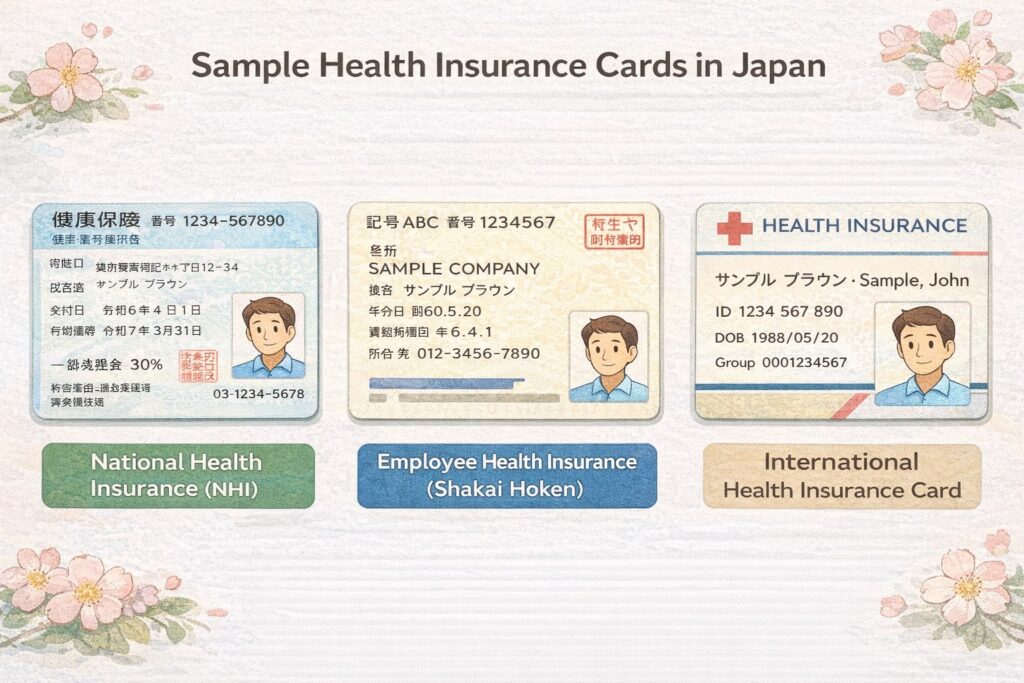
2. Employee Health Insurance (Shakai Hoken)
Who joins this?
- Full-time employees
- Some part-time workers
How much does it cost?
- About 10% of your salary
- Your company pays half
What does it cover?
- Same medical coverage as NHI
- Includes:
- Pension
- Maternity benefits
- Paid sick leave (some cases)
How to join
- Your company handles registration
What Does Health Insurance Cover?
With Japanese health insurance, you usually pay only 30% of the cost.
Covered services include:
- Doctor consultations
- Hospital stays
- Prescription medicine
- X-rays and tests
- Surgery
❌ Not fully covered:
- Cosmetic surgery
- Some dental procedures
- Private hospital rooms
How Much Does a Doctor Visit Cost?
With insurance:
- Clinic visit: ¥1,000 – ¥3,000
- Hospital visit: ¥3,000 – ¥6,000
- Medicine: ¥500 – ¥2,000
Without insurance, costs can be 3 times higher.
What Is the Health Insurance Card?
After joining, you receive a health insurance card.
Important rules
- Always carry it
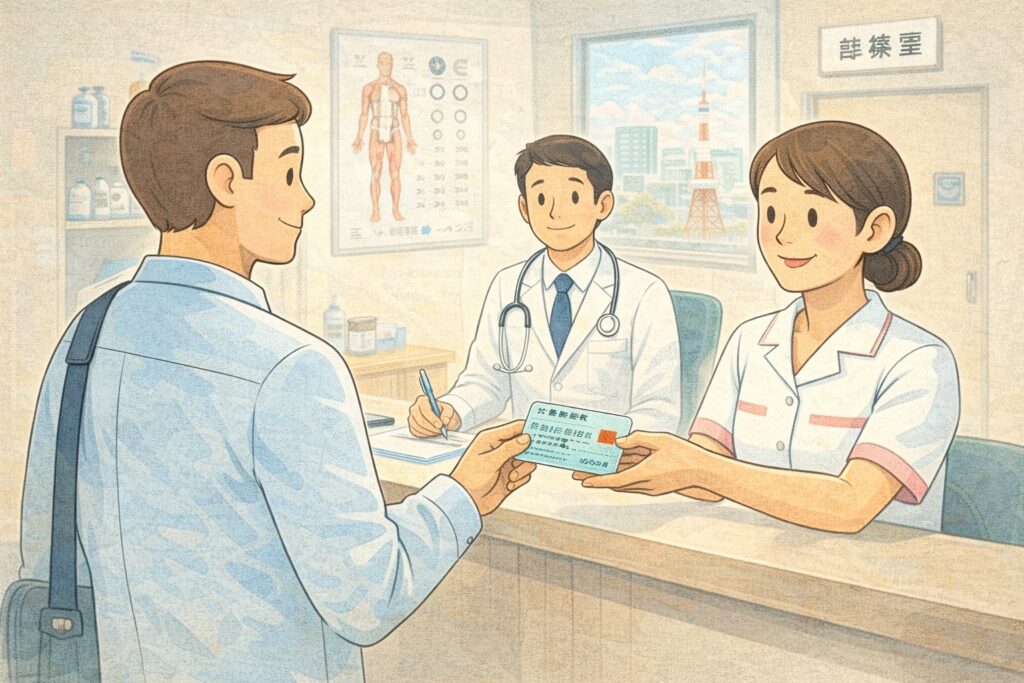
- Show it at reception before seeing a doctor
- If you forget it, you pay full price first and get a refund later
What To Do When You Get Sick
Step-by-step
- Find a nearby clinic or hospital
- Bring:
- Health insurance card
- Cash or card
- Fill out a form (usually in Japanese)
- Pay 30% of the bill
- Pick up medicine at a pharmacy
Can Foreigners Use English-Speaking Doctors?
Yes, especially in big cities.
Tips
- Search “English-speaking clinic + city name”
- Large hospitals often support English
- Use translation apps if needed
Emergency Care in Japan
Ambulance
- Call 119
- Ambulance is free
Hospitals
- Emergency treatment is covered by insurance
- You still pay the 30% portion
If You Lose Your Job or Change Visa
- You may move from Employee Insurance → National Health Insurance
- Report changes at your city office within 14 days
Common Mistakes to Avoid
❌ Not joining insurance
❌ Forgetting to pay monthly premiums
❌ Losing the insurance card
❌ Assuming travel insurance replaces Japanese insurance
Useful Tips
- Keep copies of medical receipts
- Pay insurance fees on time
- Register dependents if allowed
- Ask for a payment plan if fees feel high
Summary Table
| Item | Details |
|---|---|
| Mandatory | Yes |
| Coverage | 70% |
| Your payment | 30% |
| Emergency number | 119 |
| Best for students | National Health Insurance |
| Best for workers | Employee Health Insurance |
Final Thoughts
Japan’s health insurance system is reliable, fair, and designed to protect everyone living in the country.
Once you’re enrolled, don’t hesitate to visit a doctor when needed—that’s what the system is for.