 Japan Guide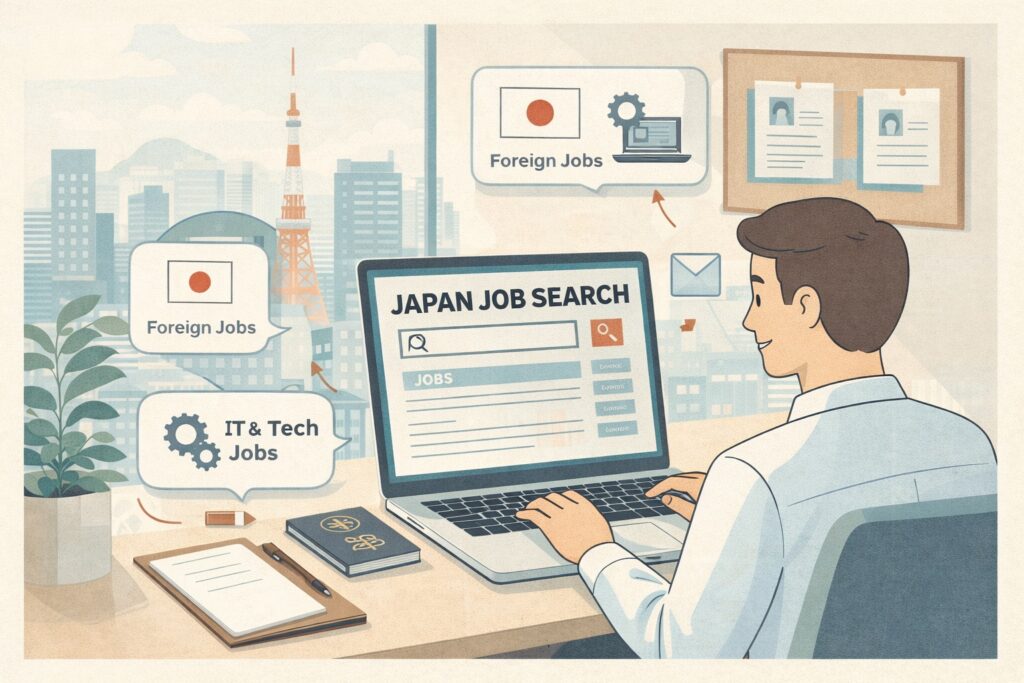
Finding a job in Japan as a foreigner is possible, but it works differently from many other countries. Language requirements, visa rules, and job-hunting culture all play a big role.
This guide explains exactly how foreigners can find jobs in Japan, what skills are needed, and how to avoid common mistakes.
Can Foreigners Really Find Jobs in Japan?
Yes. Thousands of foreigners work in Japan across industries like IT, education, hospitality, manufacturing, and international business.
Your chances depend on:
- Your visa status
- Your Japanese level
- Your skills and experience
- Your job search strategy

Step 1: Understand Visa Requirements First
Before applying for jobs, you must know which visa you qualify for.
Common work visas include:
- Engineer / Specialist in Humanities / International Services
- Skilled Labor
- Instructor (teaching)
- Student visa with part-time permission
Most full-time jobs require:
- A university degree
- A job related to your field of study
Tip: Employers usually sponsor your visa only after offering you a job.
Step 2: Decide What Type of Job You Want
Foreigners in Japan commonly work in these fields:
IT & Tech
- Software developer
- Web designer
- System engineer
- QA tester
Japanese level: Low to medium (depends on company)
Teaching & Education
- English teacher
- Language school instructor
- International school staff
Japanese level: Low to medium
Hospitality & Service
- Hotels
- Restaurants
- Tourism-related jobs
Japanese level: Medium to high
Office & Corporate Jobs
- Sales
- Marketing
- Translation
- HR
Japanese level: Medium to high
Step 3: Learn Basic Japanese (Even a Little Helps)
You do not need perfect Japanese, but basic communication is extremely important.
Recommended levels:
- JLPT N4–N3: Part-time and service jobs
- JLPT N3–N2: Office and corporate jobs
- JLPT N2–N1: Professional and management roles
Even simple Japanese shows effort and improves trust with employers.
Step 4: Use the Right Job Websites
Not all Japanese job sites are foreigner-friendly. Focus on platforms that support English or international hiring.
Job sites popular with foreigners:
- General job portals for international workers
- IT-focused recruitment platforms
- Recruitment agencies specializing in foreigners
- Company career pages
Tip: Always check if visa sponsorship is available before applying.
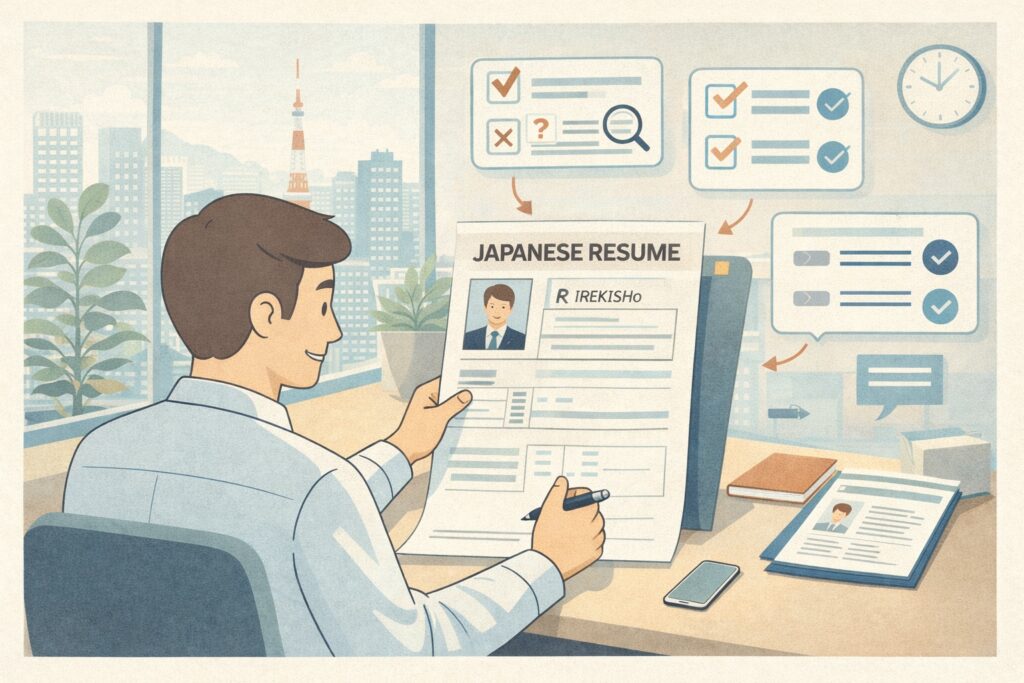
Step 5: Prepare a Japan-Style Resume
Japan uses two types of resumes:
- Rirekisho (Japanese-style resume)
- English CV (for international companies)
Important points:
- Clear job history
- Exact dates
- Simple layout
- Professional photo (often required)
Avoid exaggeration. Japanese employers value honesty and consistency.
Step 6: Apply Strategically (Not Randomly)
Instead of applying everywhere:
- Target jobs that match your visa
- Apply to roles matching your experience
- Customize your resume slightly for each role
Quality applications work better than mass applications.
Step 7: Prepare for Interviews
Japanese interviews may feel formal.
Common expectations:
- Polite language
- Punctuality
- Clean appearance
- Clear explanation of your motivation
You may be asked:
- Why Japan?
- Why this company?
- How long do you plan to stay in Japan?
Answer honestly and respectfully.
Step 8: Use Recruitment Agencies
Recruitment agencies can:
- Match you with suitable companies
- Help with interviews
- Explain visa procedures
This is especially helpful if:
- You don’t speak much Japanese
- You’re applying from outside Japan
Common Mistakes Foreigners Make
- Ignoring visa rules
- Applying without checking language requirements
- Using non-Japan-style resumes
- Expecting quick results
- Not learning any Japanese
Job hunting in Japan often takes time. Patience matters.
How Long Does It Take to Get a Job?
Typical timelines:
- 1–3 months for experienced professionals
- 3–6 months for beginners or career changers
Consistency is key.
Final Thoughts
Finding a job in Japan as a foreigner is challenging but realistic. With the right preparation, skills, and mindset, many people succeed every year.
Start early, stay organized, and don’t give up.