 Japan Guide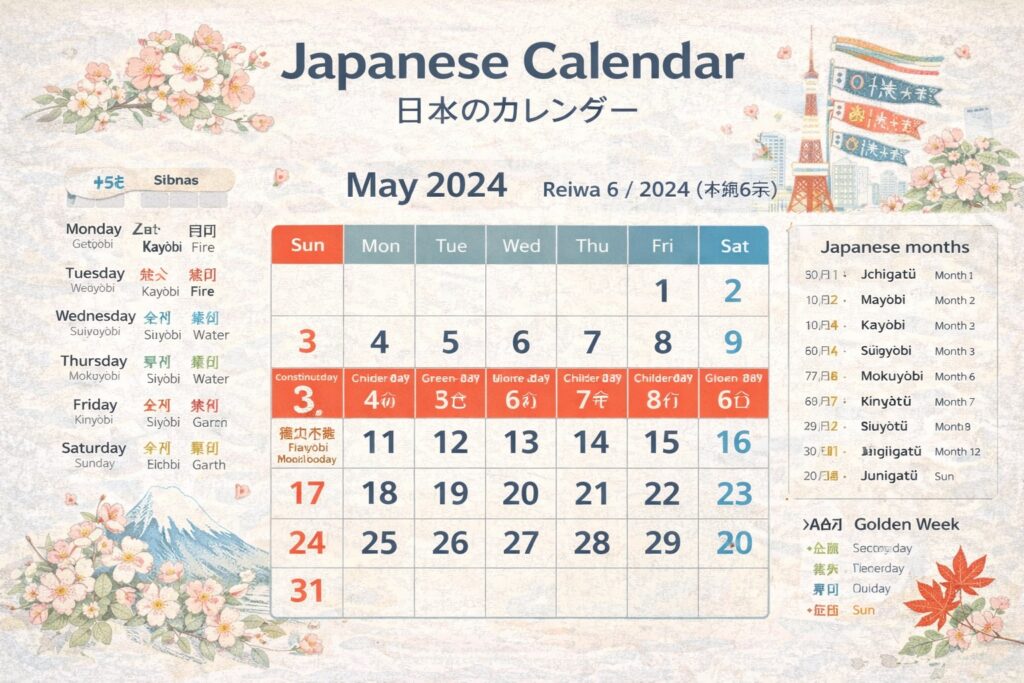
Understanding the Japanese calendar is very helpful when you live, work, or study in Japan. Schedules, holidays, school terms, work life, and even official documents follow rules that may feel different from what you’re used to.
This guide explains how the Japan calendar works in simple words, including holidays, eras, weekdays, and how Japanese people use calendars in daily life.
Does Japan Use the Same Calendar as Other Countries?
Yes.
Japan officially uses the Gregorian calendar, the same one used in most countries.
That means:
- 12 months (January to December)
- 7-day weeks
- Same dates as international calendars
However, Japan also uses unique systems and customs alongside it.
The Japanese Era System (Very Important)
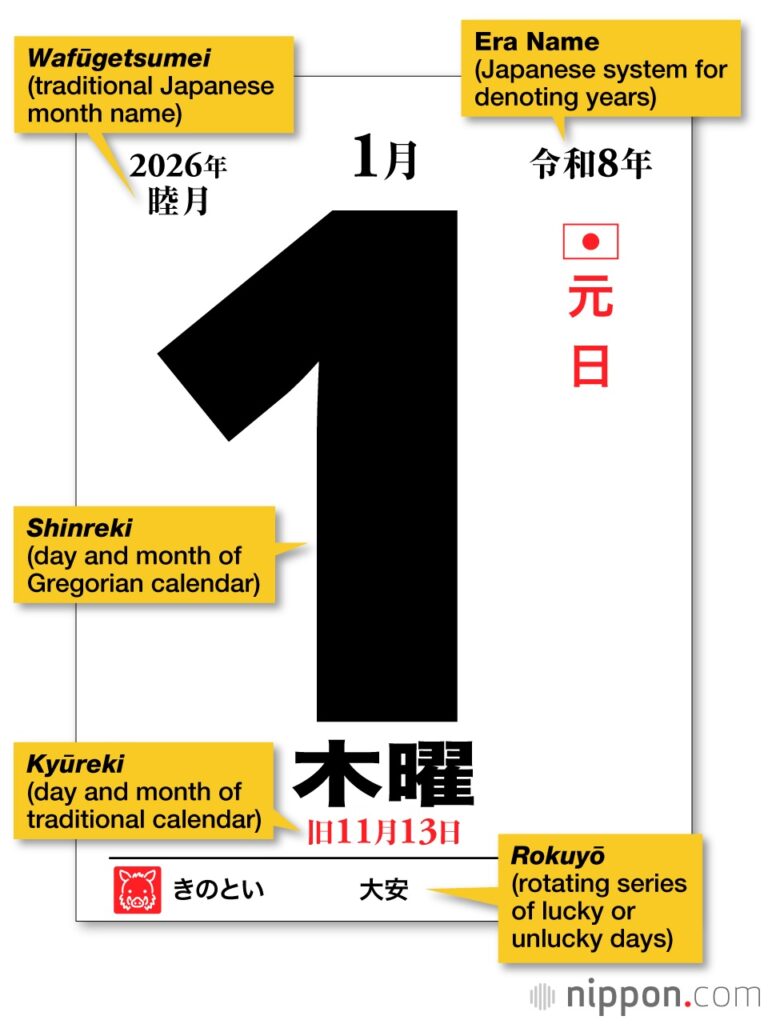
In addition to Western years (2025, 2026, etc.), Japan uses an era-based calendar.
Current Era
- Reiwa (令和)
- Reiwa started in 2019
Example
- 2025 = Reiwa 7
- 2024 = Reiwa 6
You may see era years on:
- Official forms
- Government documents
- Bank papers
💡 Most daily life still uses Western years, but forms may ask for era years.
Months in Japan
Months are very simple.
Japanese month names are just numbers:
| Month | Japanese | Meaning |
|---|---|---|
| January | 1月 (ichigatsu) | Month 1 |
| February | 2月 (nigatsu) | Month 2 |
| March | 3月 (sangatsu) | Month 3 |
| … | … | … |
| December | 12月 (jūnigatsu) | Month 12 |
No special names like in some cultures.
Days of the Week in Japan
Japanese weekdays are based on elements, not gods or planets.
| Day | Japanese | Meaning |
|---|---|---|
| Monday | 月曜日 (getsuyōbi) | Moon |
| Tuesday | 火曜日 (kayōbi) | Fire |
| Wednesday | 水曜日 (suiyōbi) | Water |
| Thursday | 木曜日 (mokuyōbi) | Wood |
| Friday | 金曜日 (kinyōbi) | Gold |
| Saturday | 土曜日 (doyōbi) | Earth |
| Sunday | 日曜日 (nichiyōbi) | Sun |
Japanese Public Holidays
Japan has many national holidays, and they are taken seriously.
Examples of Major Holidays
- New Year’s Day (Jan 1)
- Golden Week (late April – early May)
- Marine Day (July)
- Respect for the Aged Day (September)
- Culture Day (November)
When a holiday falls on Sunday, Monday becomes a holiday (called a substitute holiday).
Golden Week (Very Important)
Golden Week is a long holiday period from late April to early May.
During Golden Week:
- Offices close
- Trains and hotels are crowded
- Travel prices increase
💡 Plan travel carefully during this time.
School and Work Year in Japan
Japan does not start the year in January for schools and companies.
Academic & Fiscal Year
- Starts in April
- Ends in March
This affects:
- School admissions
- Company hiring
- Government budgets
Business Days vs Holidays
In Japan:
- Saturday and Sunday are weekends
- National holidays are non-working days
- Many offices close strictly on holidays
Banks, city offices, and clinics usually close on:
- Weekends
- Public holidays
How Japanese People Use Calendars Daily
Common calendar habits:
- Paper wall calendars at home
- Desk calendars at offices
- Smartphone calendars synced with holidays
- Marking garbage days, rent days, paydays
Many calendars automatically show national holidays in red.
Best Calendar Apps for Life in Japan
- Google Calendar (Japanese holidays included)
- iPhone Calendar (Japan region)
- Local city apps (garbage & event schedules)
Always set your region to Japan for accurate holidays.
Common Confusions for Foreigners
❌ Not knowing about substitute holidays
❌ Forgetting offices close during Golden Week
❌ Confusion between Western year and era year
❌ Missing deadlines due to holidays
Tips to Use the Japan Calendar Smoothly
- Add Japanese holidays to your calendar app
- Learn the current era year
- Check holidays before appointments
- Avoid important paperwork near long holidays
Final Thoughts
The Japanese calendar may look familiar, but it has unique rules and customs that affect daily life. Once you understand holidays, era years, and the April–March system, living in Japan becomes much easier.
A good calendar setup saves time, money, and stress.